
Silica family
Exsil 100
The original Exsil range – 100 Å Type A silica with the widest choice of bonded phases.
Pore size
100 Å (± 3 Å)
Surface area
208 m²/g
Pore volume
0.52 mL/g
Particle sizes
3 – 15 µm
Silica type
Type A
Bonded phases
17
What is Exsil 100
Exsil 100
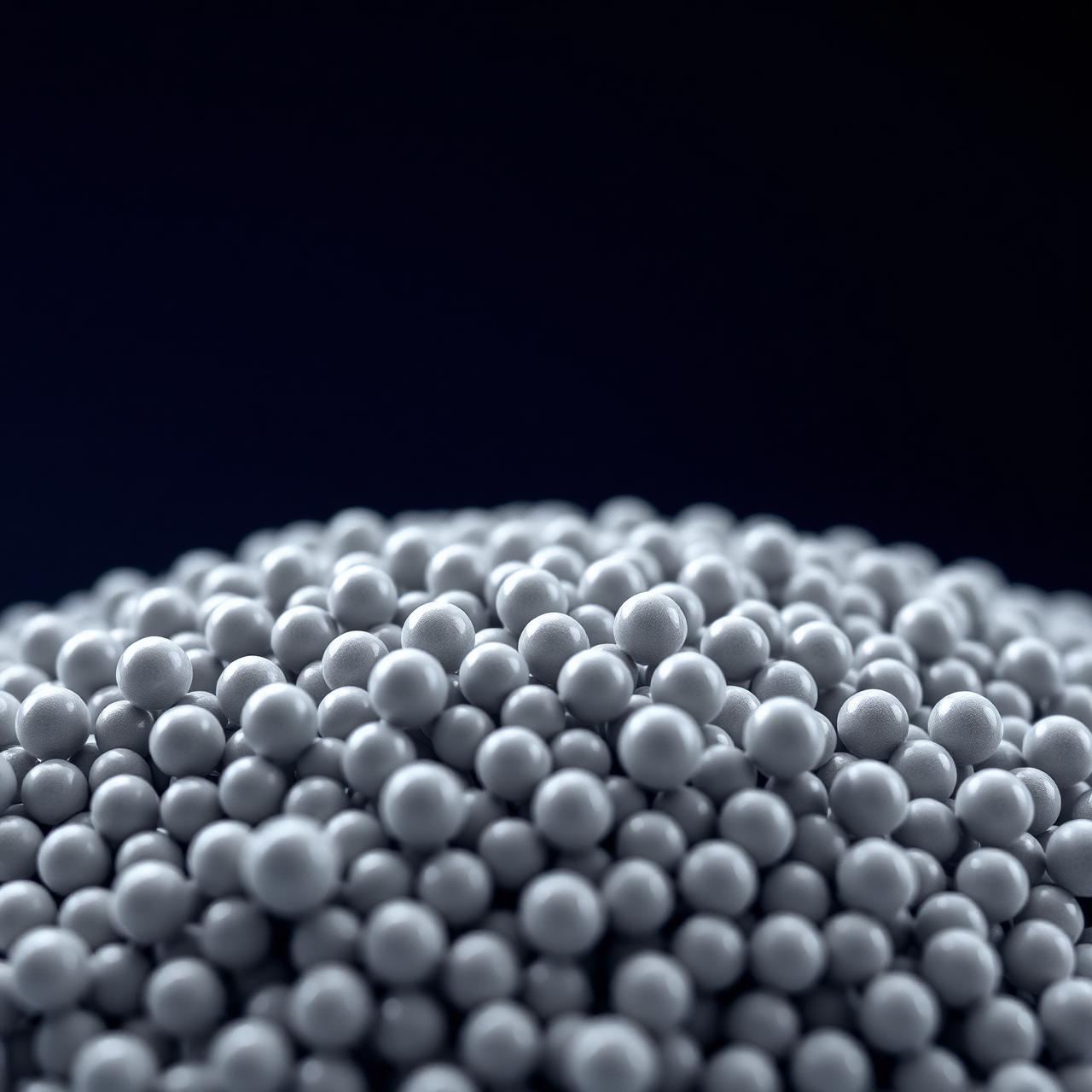
Exsil 100 is the original Exsil range, developed as an alternative to Spherisorb-type products. It is a Type A silica with a 100 Å pore diameter controlled to ± 3 Å, a pore volume of 0.52 mL/g and a surface area of 208 m²/g.
Its extensive range of bonded phases includes the base-deactivated ODS-B and Octyl-B phases, which are so deactivated that they can chromatograph strong bases in buffer-free eluents.
Why Exsil 100
Why chromatographers choose Exsil 100.
Widest range of bonded phases
17 chemistries from C1 to SAX and SCX, including Diol and Phenyl-HL.
Tight pore control
100 Å media is typically controlled between 97 and 103 Å with a pore volume of 0.50 – 0.52 mL/g.
Base-deactivated ODS-B and Octyl-B
Among the first base-deactivated analytical reversed phases, allowing many bases to be run without buffers.
Proven in the literature
Exsil 100 columns have been used in peer-reviewed methods since 1990.
Typical applications
Where Exsil 100 is used.
Collagen cross-links
Ion-pair reversed-phase assay – James, Perrett & Thompson, J. Chromatogr. B 525 (1990) 43.
Natural products
Profiling on Exsil 100-5 ODS – Wongsawatkul et al., Int. J. Mol. Sci. 9 (2008) 2724.
Oligosaccharides
Separation on Exsil 100 HAAX, 1.5 µm – Li et al., J. Food Compos. Anal. (2026).
Electrochromatography
Sulfonated Exsil 100 as packing material – Pirogov & Buchberger, J. Chromatogr. A 916 (2001) 51.
Performance evidence
Performance evidence
Batch-to-batch consistency
50 production batches of Exsil 100 silica: pore diameter 91 – 103 Å, pore volume 0.51 – 0.54 mL/g, surface area 201 – 224 m²/g.
Example quality assurance report
Batch 22/411, 5 µm: median pore diameter 100 Å, pore volume 0.52 mL/g, surface area 207 m²/g, mean diameter 5.00 µm (number), SD 0.88 µm.
Technical characteristics
Engineered properties.
| Particle sizes | 3, 5, 7, 10, 12, 15 µm |
| Pore size | 100 Å (± 3 Å) |
| Specific surface area | 208 m²/g |
| Pore volume | 0.52 mL/g |
| Silica type | Type A |
| Base silica | Exsil 100 |
| Carbon load | C1 3 %, C8 6 %, ODS 11 %, ODS-1 7 %, ODS-B 12 %, CN 3.5 %, NH₂ 2 %, SAX 3 %, SCX 3 % |
| Morphology | Spherical, porous |
Available modifications
Bonded phases on Exsil 100.
Reversed phase
- ODS (C18, endcapped) · L1
- ODS-1 (C18, not endcapped) · L1
- ODS-B · L1
- ODS-AB · L1
- Octyl C8 (endcapped) · L7
- Octyl-B · L7
- Octyl-AB · L7
- Hexyl C6 · L15
- TMS C1 · L13
- Phenyl-HL · L11
Normal phase / HILIC
- Silica · L3
- Amino NH₂ · L8
- Nitrile CN · L10
- Nitrile HL · L10
- Diol · L20
Ion exchange
- SAX · L14
- SCX · L9
Sizes & formats
Sizes & formats
| Particle size | Scale |
|---|---|
| 3 µm | High-throughput analytical |
| 5 µm | Routine HPLC / QC |
| 7 µm | Semi-preparative |
| 10 µm | Preparative |
| 12 / 15 µm | Preparative / process |
FAQ